

frba.over-blog.com/
24 Janvier 2021

Do you actually want to know What is Google Drive File Stream? If yes then you are in right place.
This is how to uninstall Google Drive File Stream on your computer. (This is made on a Mac computer.)1. Open the 'Applications' folder in finder2. Popular Alternatives to Drive File Stream by Google for Windows, Mac, Web, Linux, iPhone and more. Explore 25+ apps like Drive File Stream by Google, all suggested and ranked by the AlternativeTo user community.
But before we begin Let's see some impressive facts about Google Drive.
According to Wikipedia, Google Drive has more than 800 million active users and over 2trillion files are stored on it.
And these are increasing rapidly day by day.
It also has the largest number of active users as compared to other cloud storage services like Dropbox and OneDrive.
Although Google Drive is the best cloud storage service provider to date but everything needs some change and so they have developed an advanced version of Backup and Sync known as 'Drive File Stream'.
In this post, I will show you some new features of this advanced product and answers to many other questions like What is Drive File Stream app? How to install it? and How does it works?
So let's Get started.
Drive File Stream is basically a kind of Sync tool for desktop or we can say it is a replacement or alternative for the Backup and Sync app.
This tool is mainly developed for G Suite users which means all the new features & functionalities of G Suite are integrated with this new program.
In simple words, we can say that it is a sync tool designed for enterprises or business users.

Update: Earlier the Drive File Stream was only limited to the G Suite account users. But now Google is importing some of its features to the normal Google Drive accounts also.
This means that using this tool you will be able to easily manage your Personal as well as Business data present in your Google Drive. As we all know that there are tons of Business data on everyone's google drive.
But when your team grows larger and larger it becomes harder to manage those kinds of things on a regular basis. But using Google Drive File Stream tool you can easily get rid of these types of problems.
And the best part is that there are no major changes in the interface but you have to install something new on your computer.
Let's see how.
In this step, we will check that Drive File Stream will support your Operating system or not. This tool is supported by the given OS.
And Yes It is supported by all popular browsers like Chrome, Firefox, Safari, etc.
In this 2nd step, First Download the tool .exe file from the given link.
Recommended: Before installing this new tool, Uninstall the Backup and Sync application.
Once the file is downloaded, open it by simply clicking on it.
Now a dialog box will appear with an install button. Click on that and the installer will start installing it.
After installation is done, log in using your G Suite account credentials and click on Next.
Once your account is validated, you will see a message ' Google Drive File Stream successfully installed'. So click on close.
Now Drive File Stream app will start up with a welcome screen 'Stream Google Drive files right to your computer'. So to continue click on Next.
At the fourth step, you will see a message to 'Open Google Drive folder'. So click on that icon.
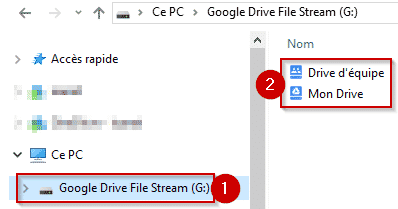
Now Open your Windows File Explorer or 'This PC' and you will see a new Drive created there. And in that drive, you will see two new drives one is My Drive and another one is Team Drives.
And all your Google Drive files getting synchronized in these two drives.
Note:- Basically My Drive is for your own use whereas the Team Drives is for the business team purpose.
Now you can customize the settings for all the files, which should be Available Offline and which should remain Online only. Stars 5 1 2.
This is one feature which I really like. But that's not all, let's see some more features and its limitations in depth.
Now let's see some of its limitations.
And now Let's see the comparison with an infographic and check which tool works more better.
Everyone knows much about the Backup and Sync https://dagorsafari325.weebly.com/complete-anatomy-2018-3-2-crack.html. tool but very few people know about this new tool & its features. But before you fully analyze the infographic, I will tell you the major difference between them.
Backup and Sync: It stores and syncs the Google Drive files locally on your computer.
Drive File Stream: As its name suggests, it streams all your files and folder directly from the could when needed.
Also Read: How to Create Google Drive Direct Download Links.
I hope after reading this detailed post I have cleared all your doubts about this new G Suite tool. And got your all answers to the question Like What is this new sync tool, How does it work and How to install Google drive file stream (Windows/Mac).
Feel free to comment below and also tell us if you want me to create such an article on different cloud storage services like DropBox, OneDrive, etc.
If you liked this post, Don't forget to share this with your friends on your favorite social media platform.
-->A stream is a sequence of bytes. In the NTFS file system, streams contain the data that is written to a file, and that gives more information about a file than attributes and properties. For example, you can create a stream that contains search keywords, or the identity of the user account that creates a file.
Each stream that is associated with a file has its own allocation size, actual size, and valid data length:
Each stream also maintains its own state for compression, encryption, and sparseness. The FILE_ATTRIBUTE_SPARSE_FILE attribute on the file is set in the dwFileAttributes member of the WIN32_FIND_DATA structure returned from the FindFirstFile, FindFirstFileEx, and FindNextFile functions if any of the streams have ever been sparse. GetFileAttributes, GetFileAttributesEx, GetFileAttributesTransacted, GetFileInformationByHandle, and GetFileInformationByHandleEx return the sparse state of the default data stream if no stream is specified.
There are no file times associated with a stream. The file times for a file are updated when any stream in a file is updated.
Opportunistic locks are maintained per stream. Sharing modes are also maintained per stream. When delete access is requested on a file, the operating system checks for delete access on all open streams in a file. If another process has opened a stream without the FILE_SHARE_DELETE permission, you cannot open the file for delete access.
If a file being copied has a data stream and the network redirector is used, the file can only be copied if the client has both the read permission and the read attributes permission.
When specified from the Windows shell command line, the full name of a stream is 'filename:stream name:stream type', as in the following example: 'myfile.dat:stream1:$DATA'.
Any characters that are legal for a file name are also legal for the stream name, including spaces. For more information, see Naming a File. The stream type (also called an attribute type code) is internal to the NTFS file system. Users therefore can't create new stream types, but they can open existing NTFS file system types. Stream type specifier values always start with the dollar sign ($) symbol. See below for a list of stream types.
By default, the default data stream is unnamed. To fully specify the default data stream, use 'filename::$DATA', where $DATA is the stream type. This is the equivalent of 'filename'. You can create a named stream in the file using the file naming conventions. Note that '$DATA' is a legal stream name. For example, the full name of a stream named '$DATA' on a file named 'sample' would be 'sample:$DATA:$DATA'. If you created a stream named 'bar' on the same file its full name would be 'sample:bar:$DATA'.
When creating and working with files that have one-character names, prefix the file name with period followed by a backslash (.) or use a fully qualified path name. Edit audio windows 10. The reason to do this is that Windows treats one-character file names as drive letters. When a drive letter is specified with a relative path, a colon separates the drive letter from the path. When there is an ambiguity about whether a one-character name is a drive letter or a file name, Windows assumes it is a a drive letter if the string following the colon is a valid path, even if the drive letter is invalid.
Following is the list of NTFS stream types, also called attribute type codes. Some of the stream types are internal to NTFS and their format is undocumented.
| Stream Type | Description |
|---|---|
| ::$ATTRIBUTE_LIST | Contains a list of all attributes that make up the file and identifies where each attribute is located. |
| ::$BITMAP | A bitmap used by indexes to manage the b-tree free space for a directory. The b-tree is managed in 4 KB chunks (regardless of cluster size) and this is used to manage the allocation of these chunks. This stream type is present on every directory. |
| ::$DATA | Data stream. The default data stream has no name. Data streams can be enumerated using the FindFirstStreamW and FindNextStreamW functions. |
| ::$EA | Contains Extended Attributes data. |
| ::$EA_INFORMATION | Contains support information about the Extended Attributes. |
| ::$FILE_NAME | The name of the file, in Unicode characters. This includes the short name of the file as well as any hard links. |
| ::$INDEX_ALLOCATION | The stream type of a directory. Used to implement filename allocation for large directories. This stream represents the directory itself and contains all of the data of the directory. Changes to streams of this type are logged to the NTFS change journal. The default stream name of an $INDEX_ALLOCATION stream type is $I30 so 'DirName', 'DirName::$INDEX_ALLOCATION', and 'DirName:$I30:$INDEX_ALLOCATION' are all equivalent. |
| ::$INDEX_ROOT | This stream represents root of the b-tree of an index. This stream type is present on every directory. |
| ::$LOGGED_UTILITY_STREAM | Similar to ::$DATA but operations are logged to the NTFS change journal. Used by EFS and Transactional NTFS (TxF). The ':StreamName:$StreamType' pair for EFS is ':$EFS:$LOGGED_UTILITY_STREAM' and for TxF is ':$TXF_DATA:$LOGGED_UTILITY_STREAM'. |
| ::$OBJECT_ID | An 16-byte ID used to identify the file for the link-tracking service. |
| ::$REPARSE_POINT | The reparse point data. |


/image%2F6317465%2F20210327%2Fob_d52c1e_application-of-microsoft-powerpoint.jpeg)
/image%2F6317465%2F20210327%2Fob_eb66e0_microsoft-office-2019-crack.jpeg)
/https%3A%2F%2Fassets.over-blog.com%2Ft%2Fcedistic%2Fcamera.png)
/image%2F6317465%2F20210221%2Fob_84dfdf_logic-x-pro-for-windows-7.jpeg)